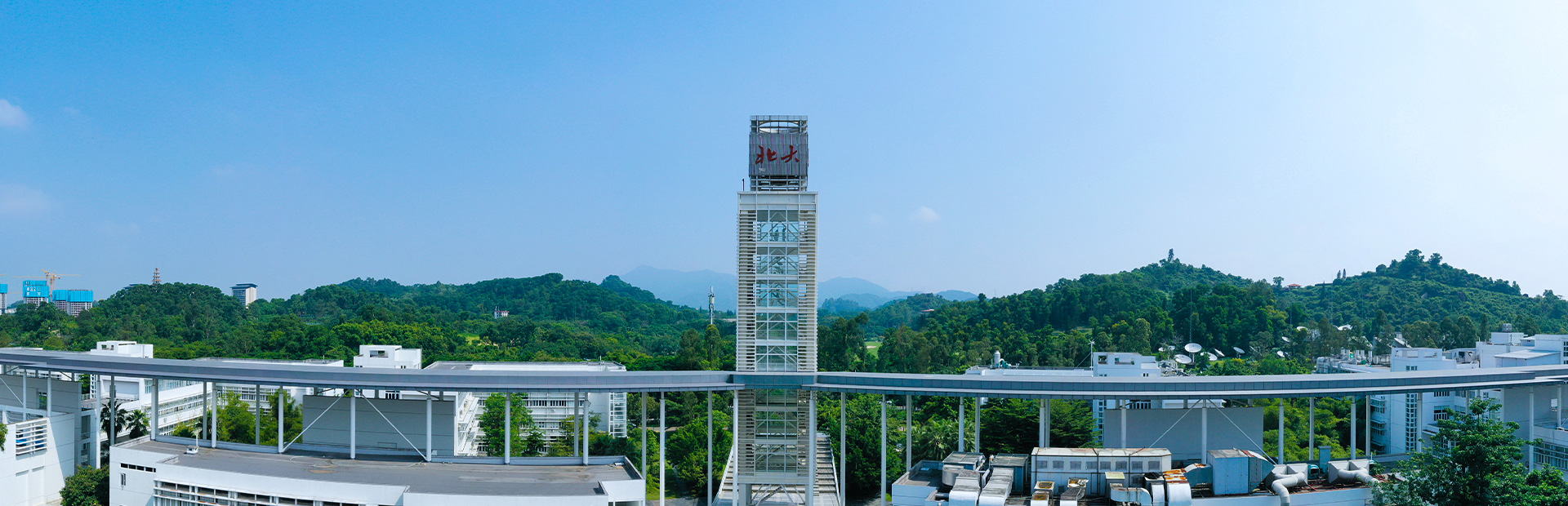
The results of Peking University’s 2026 Outstanding Doctoral Dissertation Awards have recently been announced. Dr. Tian Yu, a doctoral graduate supervised by Associate Professor Andrew S. Lee at the School of Chemical Biology and Biotechnology, received this honor for his dissertation titled “Non-viral Delivery of FullLength Dystrophin mRNA Targeted to Skeletal Muscle for DMD Therapy.”
Peking University established the Outstanding Doctoral Dissertation Award to recognize innovative research achievements made by doctoral students during their studies, and to guide young scholars to uphold academic integrity and pursue excellence. Tian’s dissertation focuses on Duchenne muscular dystrophy (DMD), a severe rare genetic disorder. Aiming at the inherent limitations of currentadeno-associated virus (AAV)gene therapy—high immunogenicity, limited cargo capacity, and non‑repeatable dosing—he pioneered a non‑viral delivery system based on engineered targeted extracellular vesicles. This work systematically progressed from proofofconcept and animal studies to early‑stage clinical trials, opening a new path for DMD gene therapy. Tian’s research stands at the frontier of basic science, addresses major national needs, and exemplifies the mission and responsibility of the new generation of researchers.
Profile
Tian Yu, Ph.D. candidate at the School of Chemical Biology and Biotechnology, supervised by Associate Professor Andrew S. Lee, received the 2026 Peking University Outstanding Doctoral Dissertation Award. During his doctoral studies, he constructed a skeletal muscle‑targeted engineered extracellular vesicle (t‑EV) delivery platform that achieves efficient delivery of fulllength dystrophin mRNA, with related results published in Nature Biomedical Engineering. He systematically validated the safety and efficacy of the t‑EV platform in DMD model mice and non‑human primates, and facilitated the launch of an investigator‑initiated trial (IIT) at Shanghai Children’s Medical Center (ClinicalTrials.gov registrationID: NCT07188012). Initial data from the first enrolled subjects showed an approximately ten‑fold increase in dystrophin protein levels in muscle.
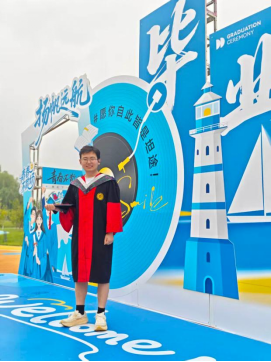
Origins at Nanyan: Where the Heart Leads, Choose to Settle
Tian chose Peking University Shenzhen Graduate School because, after comparison, he was drawn to its academic atmosphere and research facilities. He was particularly moved by the gene therapy direction of Associate Professor Andrew S. Lee’s team and aspired to delve deeply into this field.
At that time, Tian might not have anticipated that this choice would lead him to an extremely challenging area: Duchenne muscular dystrophy—a fatalx‑linked recessive disorder in which patients often lose ambulation in adolescence and have a lifespan typically under thirty. Current AAV therapies are constrained by immune risks, capacity limits (unable to accommodate the fulllengthof14kb gene) and singledose administration. Tian would explore a completely new approach under his supervisor’s guidance.。
Choosing the Topic: Supervisor as Navigator, Personal Exploration and Verification
Tian candidly admits that the project was defined through continuous literature reading, and he promptly sought his supervisor’s advice when encountering difficulties. The broad direction was set by Professor Andrew, while Tian was responsible for execution and troubleshooting. “The project’s blueprint was set upon enrollment, but technical challenges emerged layer by layer.” For months he saw no positive results and considered switching directions, but he chose to “persist a little longer.” After overcoming key hurdles, his research gradually gained momentum.
His scientific breakthroughs never came from dramatic flashes of inspiration; countless repeated experiments, meticulous cross�validation, and stubborn perseverance during low points collectively composed his complete research journey. The simple phrase “just keep going” captures the most authentic and moving essence of a doctoral student’sjourney.
Facing Failure: Leverage Team Strength, Don’t Struggle Alone
Regarding his supervisor’s role, Tian holds a clear and insightful understanding: “The supervisor is both a guide and a supporter. He gave me a great deal of freedom, but always offers precise guidance at critical moments.” After years of close collaboration, he developed an efficient mode of interaction: “I find the most effective way to engage with my supervisor is to report proactively and communicate in a timely manner, bringing my own thoughts, questions, and possible solutions to the discussion—rather than waiting for him to ask.” He believes the supervisor is both a guide and a supporter, offering freedom but stepping in with precision when needed. When experiments failed or data were unsatisfactory, he frequently wavered, but the solution was to rely on the supervisor and the team’s collective experience rather than stubbornly struggle alone
Scientific Breakthrough: A Radically Different Path
Under the guidance of Associate Professor Andrew S. Lee, Tian’s doctoral dissertation proposed a solution fundamentally distinct from the mainstream approach: completely abandoning viral vectors and instead using engineered extracellular vesicles (t�EVs) as delivery vehicles to precisely deliver full�length DMD mRNA to skeletal muscle. The advantages of this strategy are structural. The absence of viral components can fundamentally reduce immunogenicity risks; mRNA delivery overcomes the packaging capacity ceiling of DNA�based vectors like AAV; and repeatable dosing provides a realistic possibility for long�term protein replacement therapy. This addresses the three major bottlenecks of AAV gene therapy in one stroke.
The efficacy of this strategy was validated in both DMD knockout mice and non�human primates. In DMD model mice, EV�delivered full�length DMD mRNA achieved sustained and stable protein expression in skeletal muscle, significantly improving muscle strength, endurance, and motor function. In non�human primate studies, repeated intravenous administrations also resulted in sustained protein expression in skeletal muscle, with no detectable hepatotoxicity, nephrotoxicity, or cardiotoxicity.
Based on these solid preclinical data, an investigator�initiated trial (IIT) has been launched at Shanghai Children’s Medical Center (ClinicalTrials.gov registrationID: NCT07188012). Preliminary data from the first two enrolled patients indicate that the therapy can safely deliver the full�length dystrophin gene to patients’ skeletal muscle, elevating dystrophin protein levels by approximately ten�fold, and improvements in motor function were also observed as measured by the North Star Ambulatory Assessment (NSAA). This is the world’s first reported successful delivery of the full�length dystrophin gene to skeletal muscle in DMD patients accompanied by functional improvement.
Despite these substantial achievements, Tian remainsmodest: “My dissertation is merely a summary of several years of research. What truly honors this period of study is that this work can bring therapeutic hope to rare�disease patients. During my doctoral studies, I also gained invaluable growth from my supervisor and peers. This outstanding dissertation award is largely attributable to my supervisor’s meticulous guidance and the collaborative efforts of the entire team—I dare not claim sole credit.”
Outside research, Tian has his own ways of relieving stress. He did not deliberately cultivate any profound hobby, but found an emotional outlet in the most routine interactions within his research group.
“In my spare time, I occasionally exercise for relaxation, but the most effective way to relieve pressure is to have casual meals and chats with group members, exchanging complaints and talking about everyday life.” Speaking of this, Tian’s tone is light and gentle. “These seemingly trivial and mundane moments have an incredibly healing power when research stress piles up.”
On days when experiments repeatedly fail and paper progress stalls, sitting together with lab mates for a meal, talking about topics completely unrelated to research, and sharing each other’s anxieties and frustrations—that resonance of “we’re all in the same boat” often proves more therapeutic than any methodology. In Tian’s view, these unremarkable daily moments constitutethe psychological and emotionalbuffer that enables doctoral students to persevere over the long haul. It is these simplest human connections that support him through the long, cold winters of research.
Looking Back, Setting the Course Forward with Sustained Deep Engagement
After completing his Ph.D., Tian chose to continue deepening his work on the existing platform rather than chasing new trends. He will continue to heed his supervisor’s advice. His supervisor, Associate Professor Andrew S. Lee, was also recognized as an Outstanding Doctoral Dissertation Advisor. Tian believes that his supervisor taught him to grasp core scientific questions and to hold steady through repeated validation, with profound knowledge, tailored mentoring, and dedicated effort. In Tian’s mind, his supervisor gave him far more than academic training—he instilled aphilosophyframework for approaching scientific problems: to identify the core scientific question amid complex experimental phenomena, and to maintain focus and direction through tedious and lengthy iterative validation. “Professor Lee is erudite, teaches according to each student’s aptitude, and is fully committed to mentoring. In recent years, he has led the team to produce multiple significant outcomes.” This is Tian’s most sincere tribute to his supervisor.
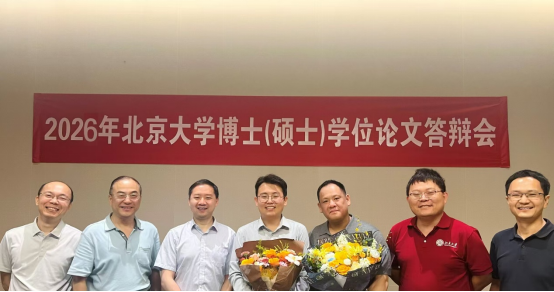
Tian Yu with his supervisor Prof. Lee and committee members
AdvicetoJunior Researchers: Choose a Good Mentor, Minimize Internal Friction, Communicate Often
If he could offer just one piece of advice to new doctoral students, Tian distills years of research experience into a concise maxim:
“Choose the right supervisor, trust your supervisor, communicate more, and don’t waste energy on internal friction.” He looks up to the stars, targeting the most difficult diseases, yet keeps his feet on the ground, transforming ideas into clinical change through persistence. Looking back on his Nanyan years, what moved him was the academic atmosphere and his interest, but what sustains him to this day is his supervisor’s guidance, team support, and countless moments of “just keep going.” Now, the young man who once gritted his teeth through long bottlenecks in the lab has grown into a scientific light�bearer who can bring hope of life to rare�disease patients.