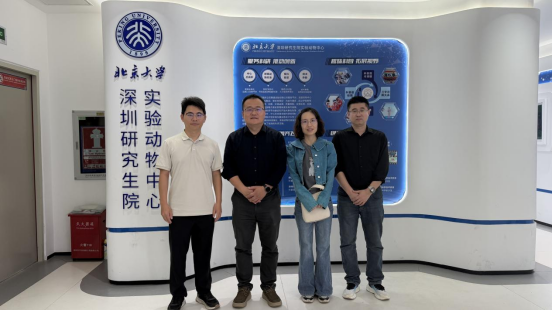
On 8 April 2026, a delegation from the Peking University Laboratory Animal Centre visited the Laboratory Animal Centre of Peking University Shenzhen Graduate School for guidance and exchange. The two sides engaged in in�depth discussions on topics including platform construction, quality control, animal welfare, science popularisation and education, and north�south synergy, contributing to Peking University’s “Management Quality and Efficiency Year” initiative and jointly building a robust research support system for laboratory animals.
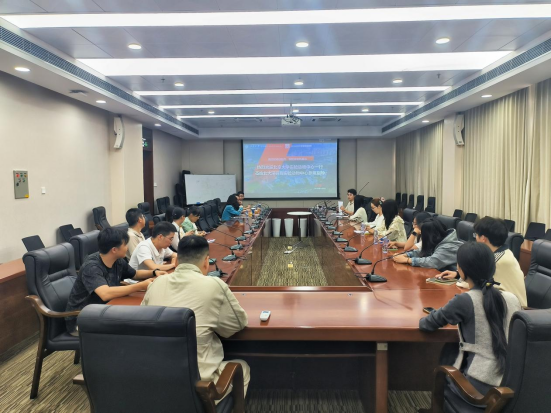
During the meeting, Dr.Zhuo Zhenjian, Director of the Laboratory Animal Centre at Peking University Shenzhen Graduate School, presented a detailed report on the centre’s construction and operation, quality control measures, and achievements in science popularisation.
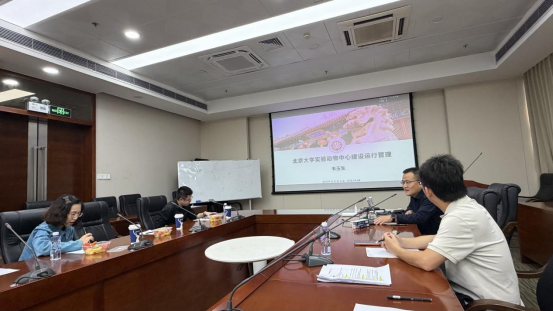
Subsequently, three experts from the Peking University Laboratory Animal Centre delivered thematic presentations, sharing advanced experience and practical achievements in platform construction, welfare ethics, and quality control. Dr. Wei Yusheng, Senior Engineer and Executive Deputy Director of the Peking University Laboratory Animal Centre, gave a report on the construction and operational management of the centre. Closely aligned with the university’s frontier disciplinary development needs, he systematically introduced how to continuously enhance service capacity, strengthen management quality and efficiency, and fully leverage the research support role of the university�level public platform.
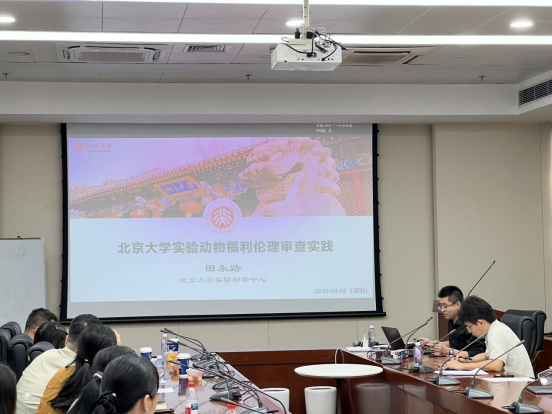
Dr. Tian Yonglu,an attending veterinarianandassistant researcherat the Peking University Laboratory Animal Centre, focused on the ethical review of laboratory animal welfare. He provided a detailed explanation of the history of the Animal Welfare and Ethics Committee, routine review requirements, procedures, basis, and principles, clarifying the core content and key points of concern in the review process.
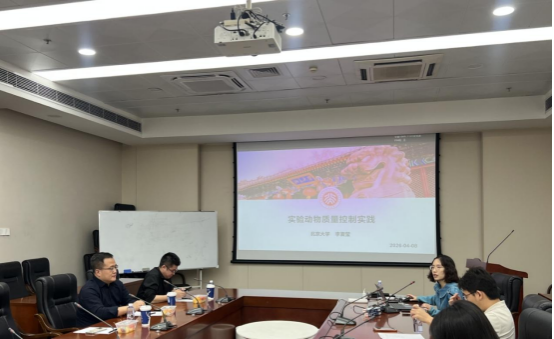
Dr. Li Xiaying, Veterinarian and Senior Engineer at the Peking University Laboratory Animal Centre, shared her experience in animal quality control and health monitoring. She gave a comprehensive overview of the establishment of a microbial testing technology system for laboratory animals, as well as common methods and technical approaches for animal health monitoring, providing a reference for standardised quality control.
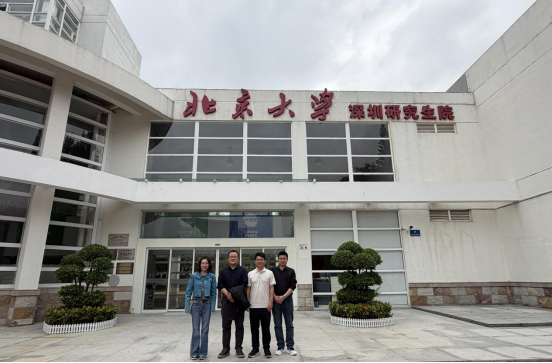
This exchange represents a significant north�south collaborative initiative of Peking University’s laboratory animal platforms, effectively promoting resource sharing and complementary strengths between the main campus and the Shenzhen Graduate School. The two sides will take this exchange as an opportunity to deepen cooperation in academic exchanges, project applications, science popularisation content creation, textbook compilation, and other areas, fostering the integrated development of the laboratory animal discipline and providing solid support for life sciences research at the university and for scientific and technological innovation in the Guangdong�Hong Kong�Macao Greater Bay Area.